Showing posts with label Reviews. Show all posts

Tuesday, September 13, 2011

Building affinity via conversation: 'Rapport Talk' and 'Affinity and Beyond'

In my blog post titled "'What is affinity?': Networking event brings affinity to light" I capture a conversation describing how one can identify an affinity. Related to that is a post by Dr. Jeremy Sherman that I recently came across that outlines what he describes as conversation that is 'Shoptalk' vs 'Affinity and Beyond.'

Dr. Sherman provides detailed analysis, along with example conversations, in his Ambigamy blog post titled "The affinity paradox: How does eye-to-eye become eye-for-an-eye in casual conversation?" Dr. Sherman's 'Shoptalk' conversation involves comparing experiences without the need for agreement; however, 'Affinity and Beyond' conversation develops deeper bonds as there is an exchange of information involving shared goals and common vision as if on a journey together.

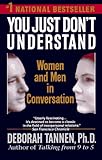
Reading Dr. Sherman's blog I was reminded of a fascinating book I read years ago by sociolinguist Dr. Deborah Tannen regarding gender differences in conversations, including what she categorizes as 'Report Talk' vs. 'Rapport Talk.' Dr. Tannen's book You Just Don't Understand: Women and Men in Conversation describes how 'Report Talk' conversation is generally used by men to convey information and establish status, while 'Rapport Talk' conversation is generally used by women to convey information and build connection.

Over the years, Tannen's book has made a world of difference to me in improving the effectiveness of my personal and professional conversation among predominately male affinity groups and predominately female affinity groups, and her book's content continues to remain relevant today. Sherman's blog adds another level of insight into what we may instinctively feel as being 'on the inside' or 'on the outside' following a verbal exchange, and the conversation queues that lead to that feeling.

Wednesday, August 17, 2011

Affinity programs: Breaking out of the hairball

It’s easy to get caught up in formulaic activities of what those in our professions refer to as tried-and-true affinity programs. Some of us even have bosses who are keen on tossing into our inboxes that latest print piece or link or email message of a major competitor's making with the attitude of 'we need to emulate them.' There can always be a place for monitoring what our industries or fields see as best practices; however, we can't have blinders to new ideas that come with risk.

Pitching a new concept for your affinity program is hard enough; however, one must first have a boundary-poking idea to pitch and an environment in which one can do so. At a recent gathering of artists and their supporters, a community in which cutting-edge views and unique perspectives are their mainstays, I spoke about a book that addresses this issue.


Orbiting the Giant Hairball: A Corporate Fool's Guide to Surviving with Grace by Gordon MacKenzie provides concepts that can be applied to any profession. A highly entertaining and quick read, the book is filled with hand drawings on nearly every page and real-life jaw-dropping stories about how the author single-handedly changed his company by coloring outside the lines.

Tuesday, August 16, 2011

Affinity definition: Tribes will form around ideas, leaders

"I'll know it when I see it." These famous words have often been spoken by a number of us. Professionals and volunteers involved in affinity relations or identifying and working with affinity groups recognize that no magic formula exists to determine every affinity or affinity group. Often times, such individuals simply know it when they see it, or know when they see signs that an affinity or affinity group may possibly exist or be developing.

Yesterday's blog looked at a formal definition of affinity. Today we look at an organic concept or definition of affinity, specifically aspects of the book Tribes by Seth Godin that illustrate "I'll know it when I see it." Tribes: We Need You to Lead Us is filled with numerous real-life examples of individuals with shared affinities coming together in support of people, products, ideas, services, causes, companies, and more.